GREECE
 MACEDONIA
CHALKIDIKI
KALLITHEA
MACEDONIA
CHALKIDIKI
KALLITHEA

2024-10-28
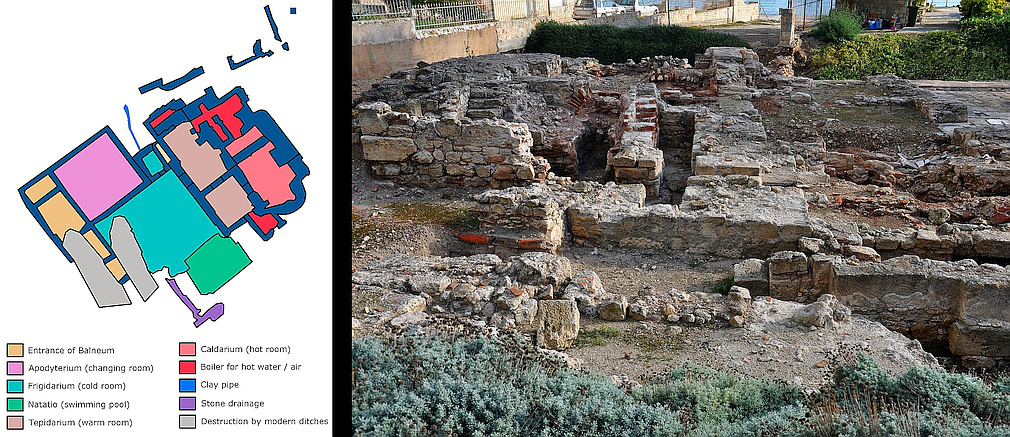
The Balneum (Small Bath) was built in the Roman Imperial Period (1st - 2nd century A.D.) and was used for a long period until the middle or the end of the 4th century A.D. - only the Romans could think of such a thing.
Its ground-plan shows a series of rooms along an axis following the sequence of their use. The entrance is found in the southern part of the bath. The second room is the frigidarium (cold room). Originally, it was decorated with frescoes and statues. A construction flanked by four columns occupied its central part. The apodyterium (changing room) is located west of the frigidarium and an open-air pool is to the east. - The tepidarium (warm room) and the caldarium (hot room) were heated by the circulation of warm air under its floors and behind its walls. Louters (tubs) were also found here. - The boilers, where hot water and air were produced were found next to the caldarium. Finally, there was also a system of underground corridors.
The balneum is associated with the worship of Asklepios. It was used for curative purposes, as suggested by the discovery of medical instruments in rooms annexed to it.
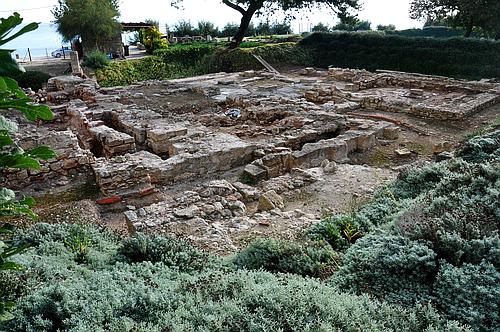
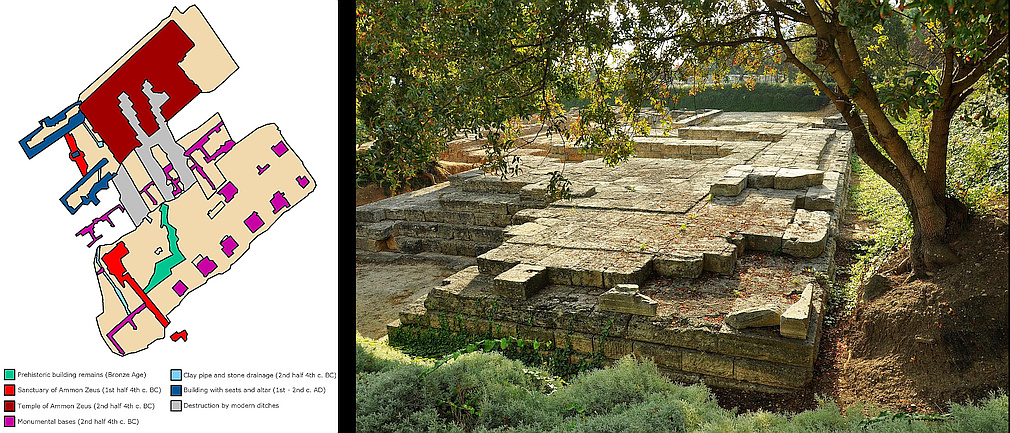
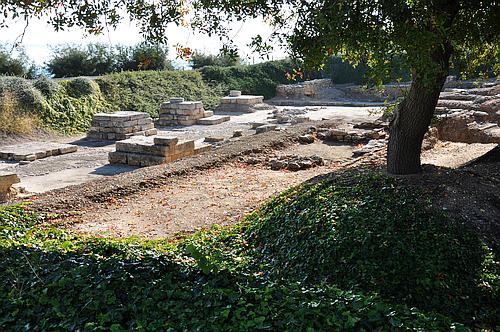
Above and below: The most important monument on the site is the Sanctuary of Zeus Ammon. The worship of the egyptian god Ammon was spread in Greece in the 5th century B.C. and the construction of buildings associated with the worship of Zeus Ammon started in the first half of the 4th century B.C. A monumental Doric temple was built in the second half of the 4th century B.C. and to the east two parallel rows of bases, which supported statues and created an open-air corridor, as it was common in Egyptian temples. This sanctuary became famous in the Greek World, especially since it was one of the most significant temples of Ammon in Greece.
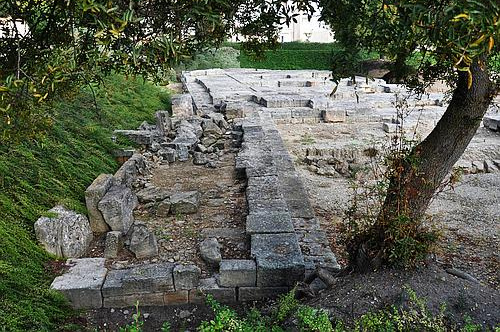
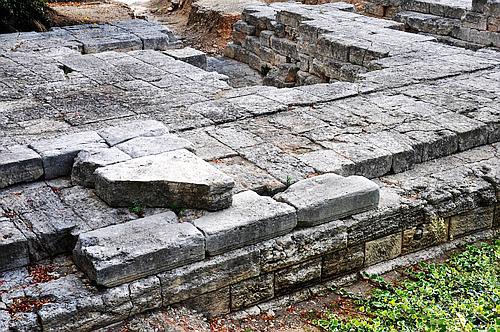
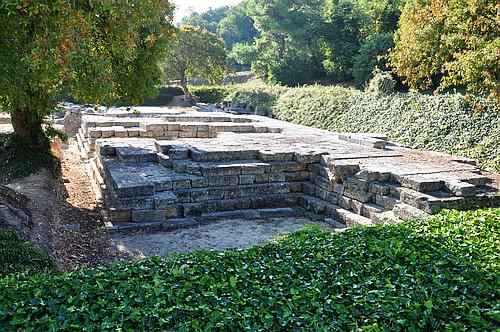
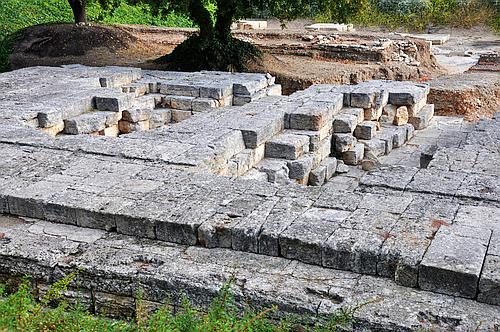
The santuary reached a peak in the Roman Imperial period. Two constructions for the accomodation of spectators, who watched the religious rites, and a small altar were built in front of the temple. The sanctuary was then destroyed during the reign of emperor Theodosios. Later, it became territory of the Russian Monastery of Panteleimon of Mount Athos and the area was used as a port for the exportation of cereals produced in the hinterland of Chalkidiki.
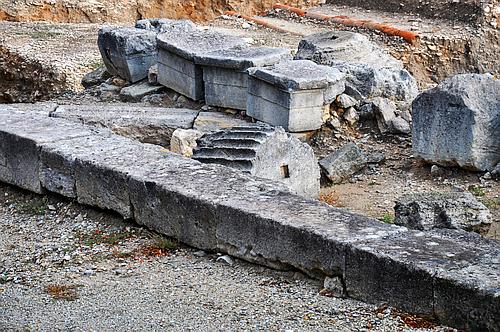
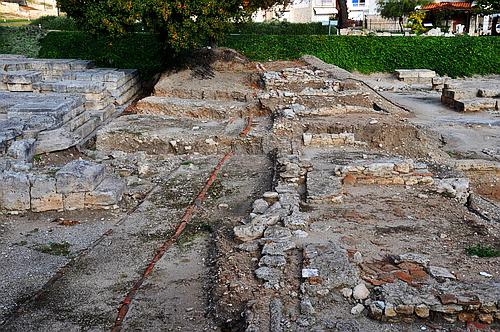
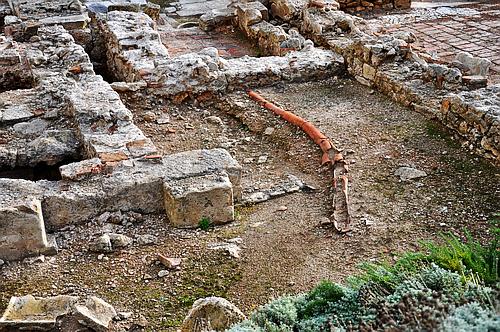
The cult of Zeus Ammon was associated with water. There was a specially worked stone in front of the temple, which was filled with water from a clay pipe, while at the same time the water was taken away to the sea by a stone drainage channel. - Below left: Remains of the open-air corridor with rows of bases for statues.