GREECE
 CRETE
LASITHI
MOCHLOS
ISLAND
CRETE
LASITHI
MOCHLOS
ISLAND

2024-10-28
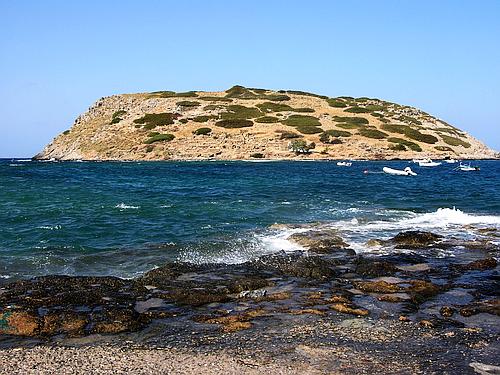
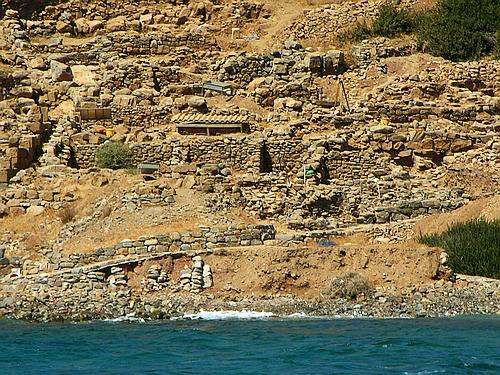
From the mainland, especially from the seaside tavernas, remains of the Minoan settlement on the island of Mochlos can be seen west of the modern chapel of Agios Nikolaos. What is now an island - some 200 m away from the mainland - was a peninsula used as a harbour in Minoan times. Courageous people can swim there in calm weather but currents may be dangerous and drag swimmers into the open sea. A safe way to get to the island is to ask a fisherman to bring you there by boat, which will cost you only a few Euros.
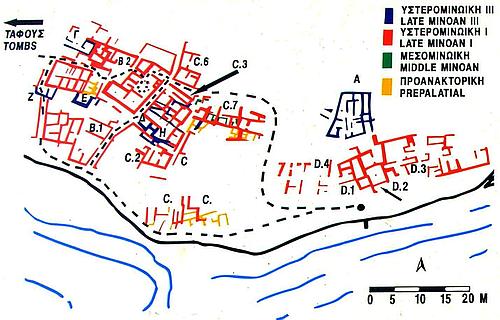
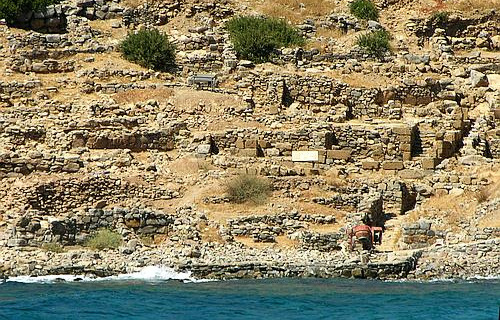
The island of Mochlos was already habitated in the Prepalatial period (3100-2000 BC). The settlement, still small in EM IB, grew considerably until the EM II period due to an increasing population. New settlers would have been attracted by the excellent harbour and the fertile plain to be used for agriculture. In the 800 years until EM III, Mochlos was one of the major centers of the emerging Minoan civilization. It was a flourishing trading post and a place where gold jewelry, stone vases and faience were manufactured. Several structures on the south side of the island date from this Prepalatial period as well as the tombs uncovered by Richard Seager. - Currently (2005), excavations are still going on.
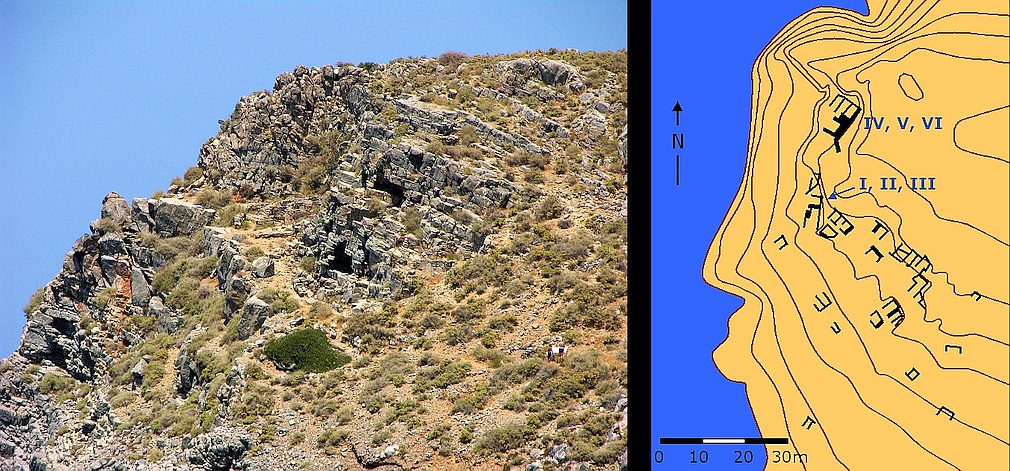
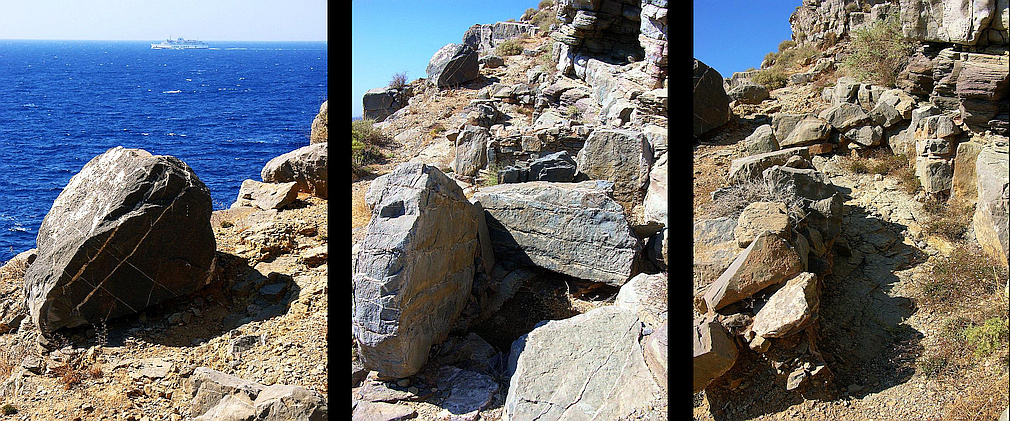
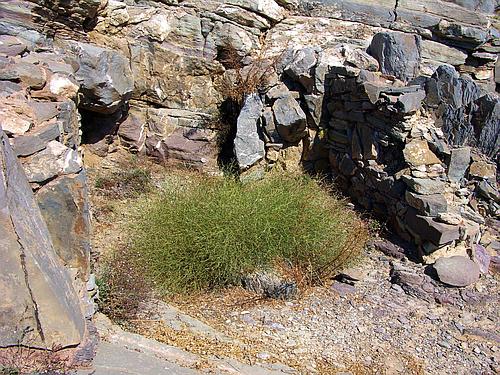
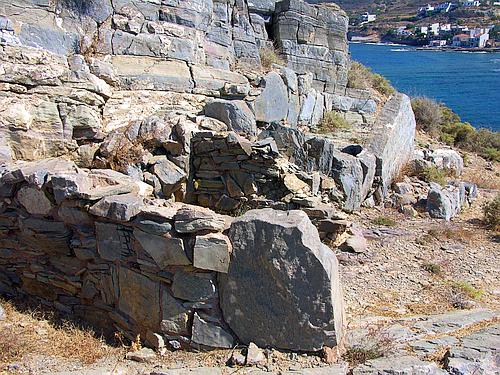
Above: View to the royal graves on the island of Mochlos and a plan. - Below: more views of the graves from nearby.
The Prepalatial (i.e. Early Minoan I - Middle Minoan I) cemetery lies on the northwest side of the island. It consists of about 30 house-like tombs that were continously used as family tombs from ca. 3000-1900 BC according to the results of the excavations. The tombs are usually small, but high above the cliffs of the west side of the island there are two complexes of tombs significantly larger and much richer, certainly belonging to highly ranked individuals of the community. They contained exceptionally rich, beautiful gold jewelry (on display in the museum of Agios Nikolaos), thus establishing their role as "royal" tombs - or tombs of the chiefs of Mochlos in the Prepalatial period.