
GREECE
 CENTRAL GREECE
VOIOTIA
HOSIOS LUKAS
CENTRAL GREECE
VOIOTIA
HOSIOS LUKAS

2024-10-28
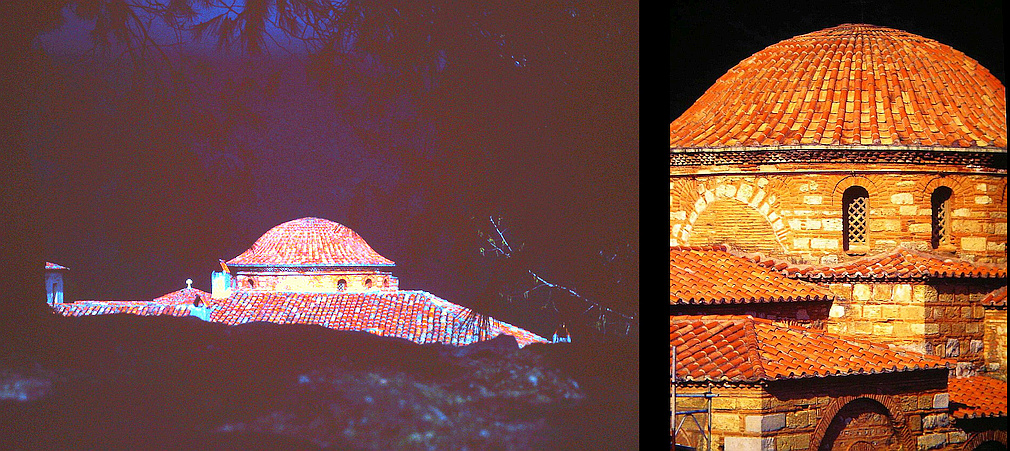
The monastery of Hosios Lukas, situated on the western slope of Mount Helikon and at the site of the now untraceable ancient Steirion, it is one of the most splendid Byzantine monuments in Greece and was rightly inscribed as World heritage of Culture by the UNESCO in 1990.
It was dedicated to the wonder-working hermit Lukas "Stiriotis", born AD 896 probably in Kastri (modern Delphi), who lived in this area from 945 until his death in AD 953. He was famous throughout the Byzantine world for his spiritual gifts and his prophecies. One of them was the prediction in 941 of the reconquest of Crete from the Saracens by an emperor called Romanos. When this came true 20 years after his death, pilgrims began to flock to his grave and a larger church was built on top of an older chapel dedicated to Saint Barbara. Lukas was then beatified (Hosios Lukas) by the Orthodox Church.
The monastery's wall encloses blocks of cells, a bell-tower, refectory, and two churches: The smaller one, dedicated to the Panagia Theotokos (Mary, mother of God), was built in the 10th century and is the earliest known example of the four-column, cross-in-square type. The second church, the Catholicon, was built only a little later, in the first half of the 11th century. It is the first octagonal cross-in-square church, comparable with the church at Daphni.
The interior decoration of both churches with early 11th century mosaics on a gold ground, characteristic of the 'second golden age of Byzantine art', is simply superb - although I don't have photographs of it.