GREECE
 ATTICA
ATHENS
ACROPOLIS
PARTHENON
ATTICA
ATHENS
ACROPOLIS
PARTHENON

2024-10-31
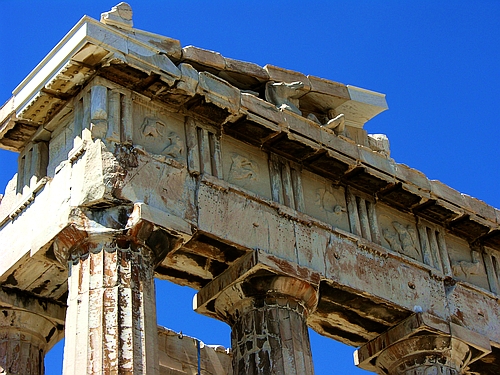
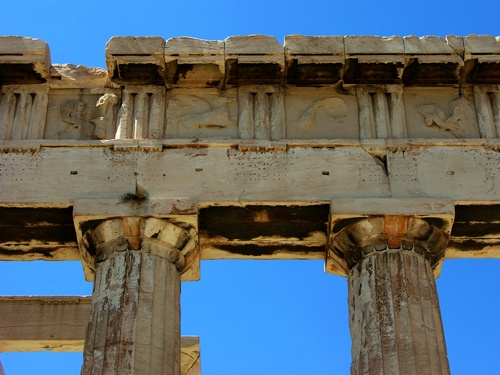
Not much is left of its pediment after Lord Elgin stripped the Parthenon of its sculptural decoration in 1801, with the Turkish permit "to remove some stones".
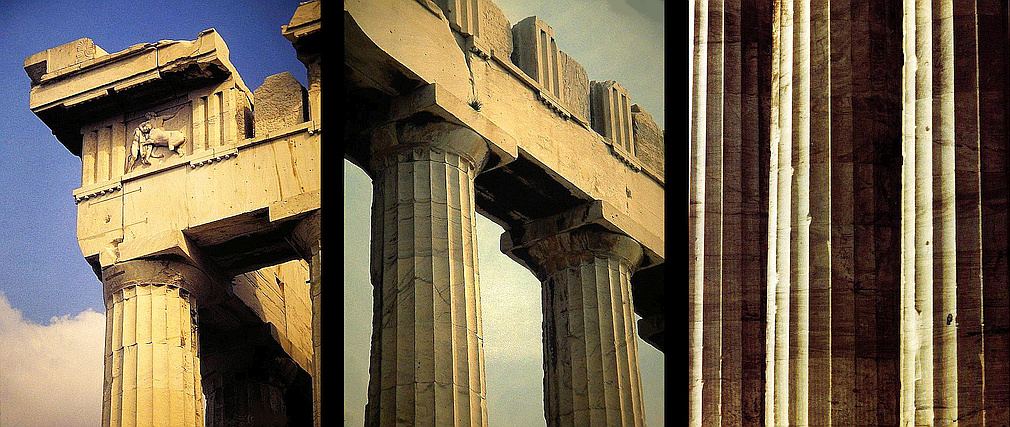
The columns of the Parthenon rise from the stylobate (72.5 x 34 m) to a height of 10.40 m, each column consisting of 10 to 12 drums with 20 shallow Doric flutings.
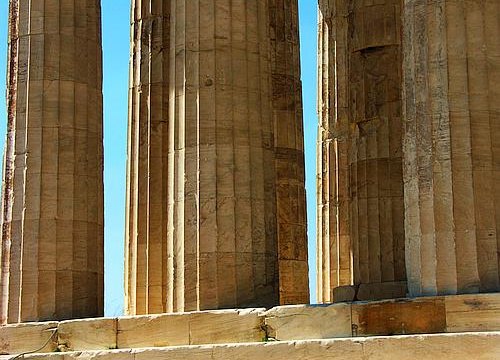
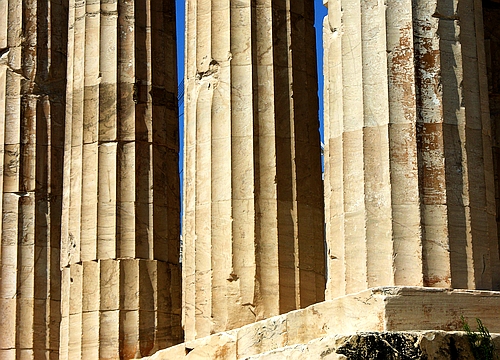
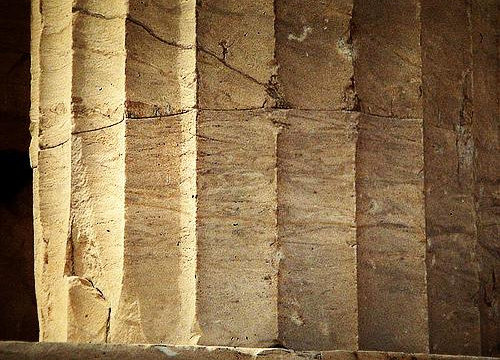
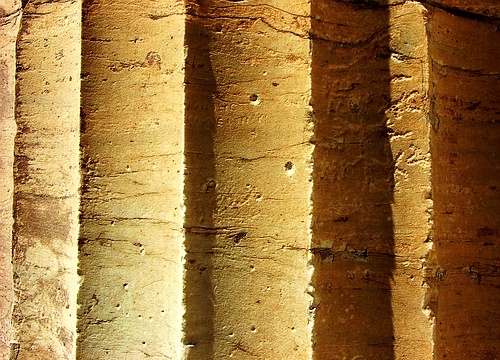
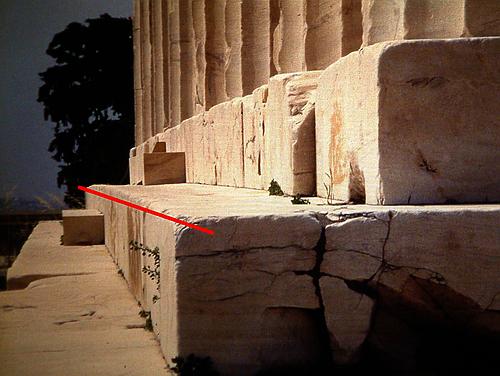
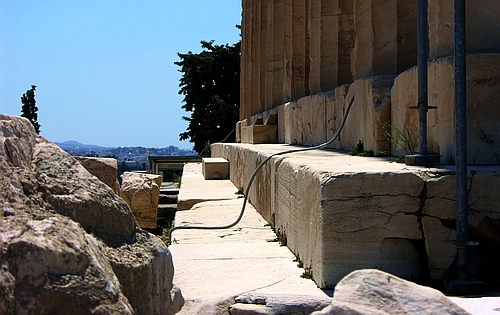
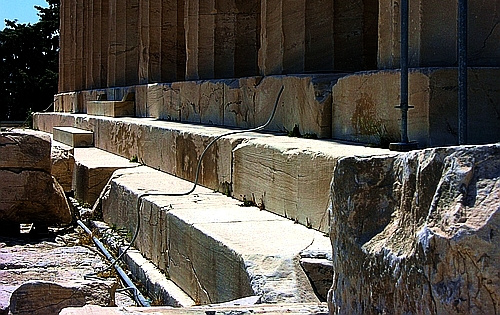
Left and below:
Looking over the stylobate of the Parthenon, you might perhaps notice that it rises a little in the centre, although this is less than only 8 cm on the 31 m of the front sides and 11 cm on the length of 69 m on the long sides. Actually this curvature is continued in the whole system of columns and entabulature!
This and other architectural refinements like the traditional 'entasis', the (slight) inclinement of the columns or the special and very reluctant treatment of the columns at the corners regarding their thickness and position are the secrets of this harmonic majesty. All these dispandments of right angle and parallels let the temple appear as an organic entirety.
In fact, all of this is not unusual with Classical temples, but the Parthenon is unsurpassed in this aspect.